
Enrollment Caps & Lemon Dropping may bring back AEP “Pre-heat” Marketing.
George Dippel, President of Deft Research –
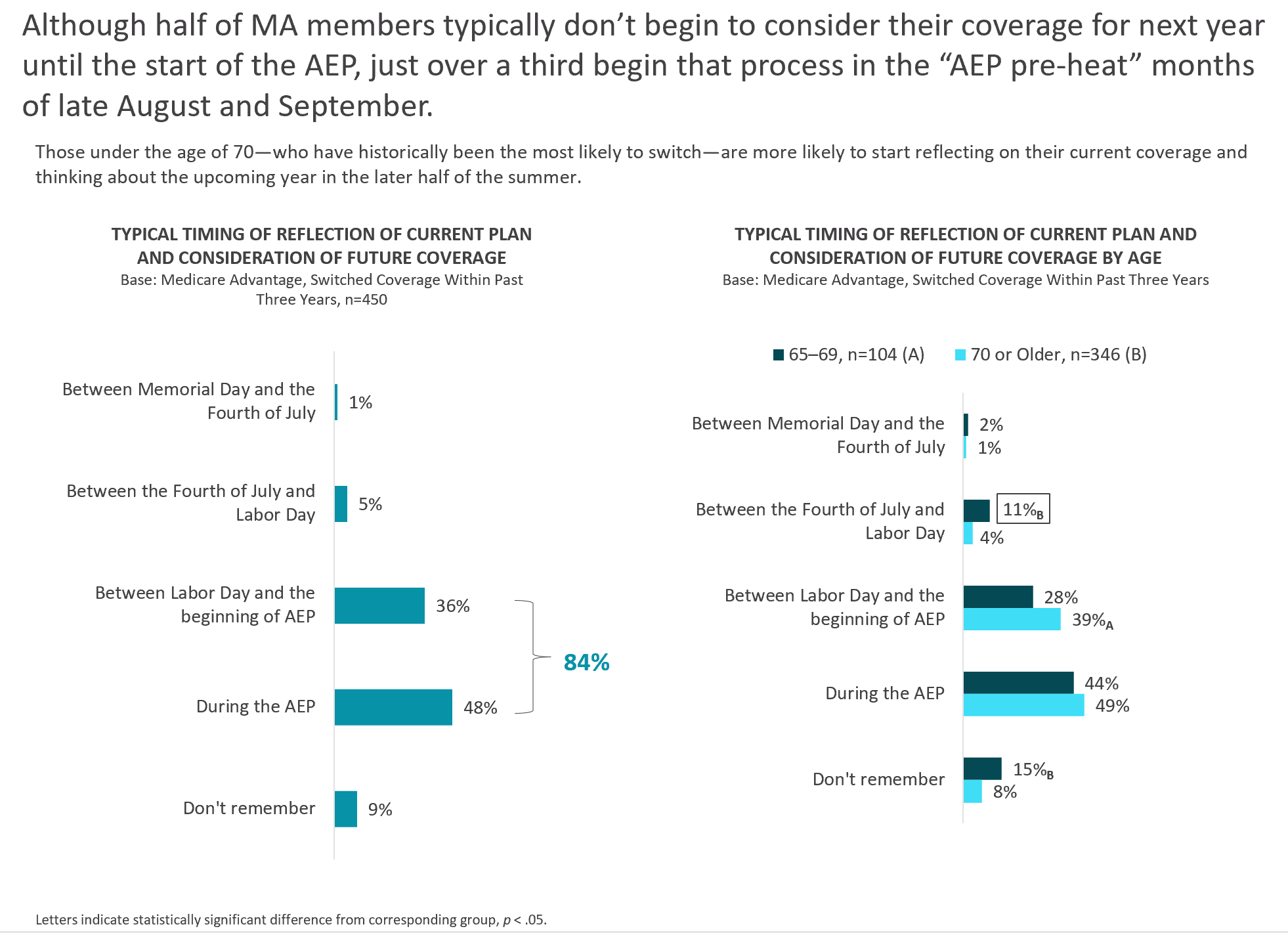
Deft Research recently published its “AEP Signals and Readiness Study” (formerly AEP Gut Check) which is our most anticipated yearly report as it helps the industry prepare for what’s brewing for the AEP. One of the interesting findings from the nearly 90-page study was the fact that somewhat younger seniors begin reflecting on Medicare earlier in the summer as seen in the right-side chart below.
That finding is key because of the recent trend of “lemon dropping” (CMS’s term for the opposite of “cherry picking”) that is occurring as financially strapped carriers grapple with untenable MLRs. MA insurers termed 1.8M non-SNP members in 2025, another 2.8M in 2026, and by our count at least 1M+ will be termed for 2027. One of Deft’s earlier studies this year showed that the segment of consumers who were most likely to have been termed last year were seniors who—to put it bluntly—tended to use the ER instead of the PCP. They were more likely to engage with the health system only when they were in the throes of a new medical crisis, not before when that emerging issue could have been dealt with better or prevented altogether. These consumers were naturally more attracted to certain types of plans and designs, and many of those plans and designs are now gone. Lemon dropping.
So, that begs the question: if we expect to see a fourth year of this malaise in ‘28 (50/50 now?) would it behoove smaller regional carriers to apply for enrollment caps, market heavily in the pre-heat months, work to curate and close leads early in the AEP, and thus fill up as much of their cap as possible before many of the least MLR-friendly seniors realize that they have been dropped?
As long as lemon dropping continues, and as long as CMS allows plans to apply for enrollment caps (and now encourages it!) shouldn’t smaller regionals protect their downside by applying for such caps? Ask yourself this. Do you think some of the regionals who enrolled way more members than they had planned these last two years wish they could have gone back in time and applied for a cap? Likely, yes. But too often the extent and location of mass lemon dropping is a mystery until after bid day. So, there is wisdom in buying insurance (applying for a cap) in the event that a major competitor “drops” more members (and tough-to-manage ones at that) onto your lap than you can absorb.
If you agree, then the timing of when regional carriers want to enroll most of their members becomes more important and we should see a resurgence of AEP “pre-heat” marketing soon. Gone are the days of waiting on the proverbial “hockey stick” of enrollment to make your numbers—the massive jolt of enrollment that rolls in starting on the Monday after Thanksgiving. One can make the case that the vulnerable regional plan would be best served to enroll as many as possible sooner and hit their enrollment cap before we even make it to Cyber Monday.
To learn about our AEP Signals and Readiness Study, please click here.